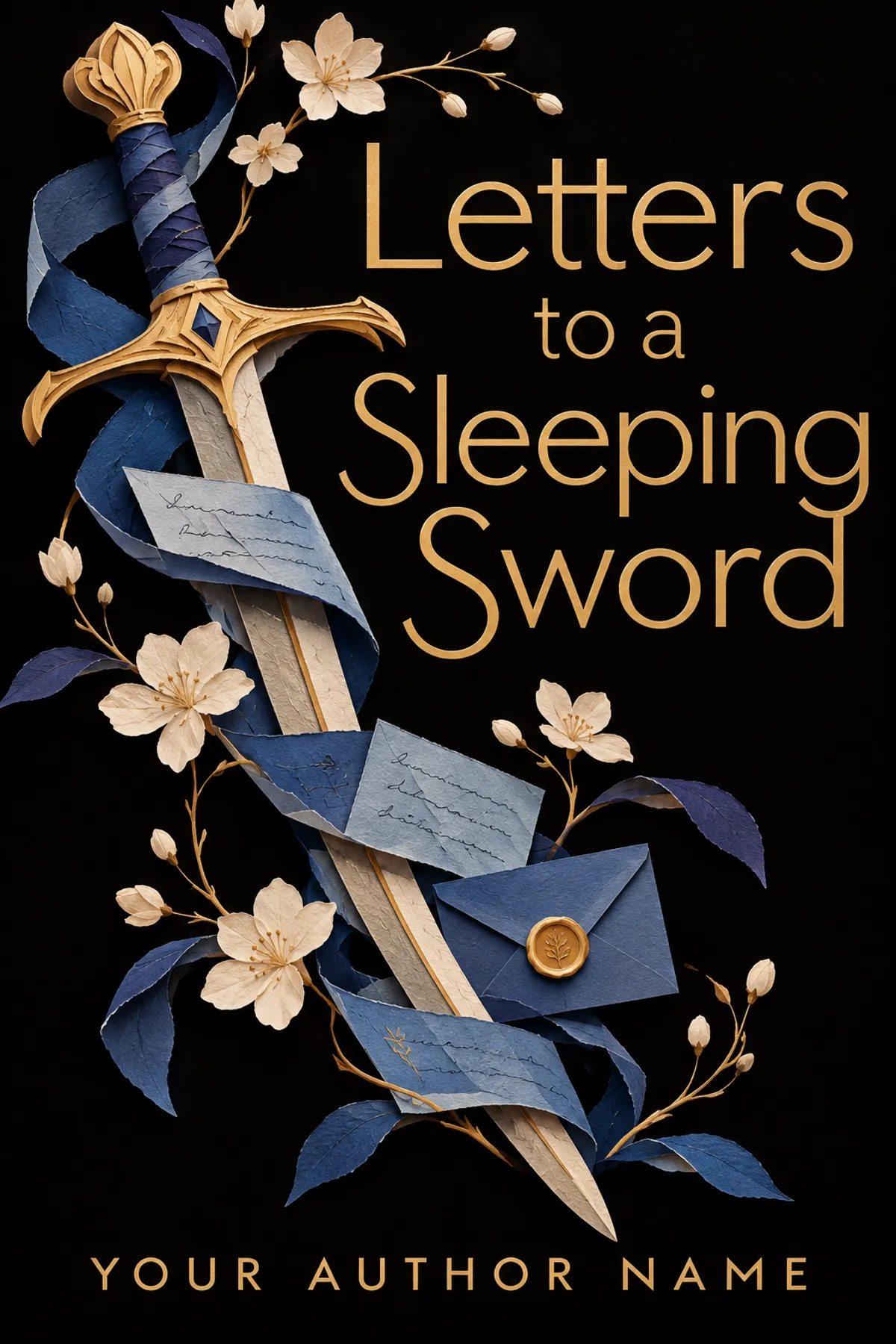
Letters to a Sleeping Sword
A human weapons conservator receives letters from the adult soldier whose consciousness is trapped in a ceremonial blade, and falls in love while arguing against his return to war.
ImagineYourBook writes a fresh draft from this idea.
How it begins
The sword's first letter complained about the polish.
Too much clove oil. I can taste it.
Ruth found the words on a clean sheet beneath the display case. She checked the room, the locks and the inventory log before deciding whether to be frightened. Everything was in order. That made the letter less reassuring.
She wrote beneath it: You do not have a mouth.
The reply appeared while she watched.
I have had twelve years to notice.
Ruth sat down.
The ceremonial blade had arrived from the palace with instructions to prepare it for a victory exhibition. Gold wire covered the hilt. Names of battles ran along the scabbard. Its official description called it the silent witness to a glorious campaign.
Apparently the witness objected.
Who are you? she wrote.
Daniel Marr. Captain, once. Tired, currently.
Ruth searched the military register. The name appeared among the dead, aged thirty at the battle of Grey Ford. The sword had been presented to the king the following winter.
She looked back at the paper.
Why haven't you written before?
Nobody put paper close enough. They mostly put flowers.
The answer made her throat tighten unexpectedly. She had spent her career protecting objects from damage. She had not imagined that one might be suffering from being carefully preserved.
Outside the workroom, a clerk knocked to ask whether the blade would be ready for the exhibition announcement. Ruth said she needed more time.
When she returned, another line waited.
They intend to wake the regiment.
She read it twice.
What regiment?
The names along the scabbard began to darken. Not battles, she saw now. Men and women, compressed into decorative script.
Ruth placed another sheet beside the sword.
Tell me where to begin.
For a long moment, no words appeared. Then, slowly:
Please stop calling this a victory.
Ruth closed the exhibition catalog and turned its triumphant cover facedown.
Outline and characters
Develop this idea
The correspondence should reveal personality before delivering exposition. Establish how the sword communicates and what Daniel can perceive, then honor those limits. His desire for embodiment may conflict with Ruth's fear of another war without making either simple. Other trapped soldiers need choices beyond serving the central romance. The release should follow an earlier demonstrated rule and carry a meaningful cost. End with the uncertainty and pleasure of meeting bodily, rather than assuming written intimacy removes every difference.
- Ruth receives written messages from the human consciousness trapped in a ceremonial sword.
- Daniel reveals that other soldiers are bound into the collection.
- Their correspondence develops distinct voices, humor and mutual affection.
- Ruth discovers the exhibition will reactivate the regiment for a new campaign.
- Daniel admits part of him wants a body back even if the price is renewed service.
- Ruth refuses to confuse loving him with deciding his future for him.
- They find an older release rite that requires relinquishing the weapons' claimed victories.
- Surviving families and bound soldiers choose whether and how to participate.
- The regiment is freed without compulsory service, and Daniel returns as an ordinary mortal.
- Ruth and Daniel meet in person, discovering that their letters were a beginning rather than a complete life together.
Characters
- Ruth Calder, 38. Human weapons conservator
- Daniel Marr, 42. Adult human soldier whose consciousness is trapped in a ceremonial sword
Series possibilities
- Ruth receives an object whose preserved consciousness refuses release until an unfinished promise is addressed.