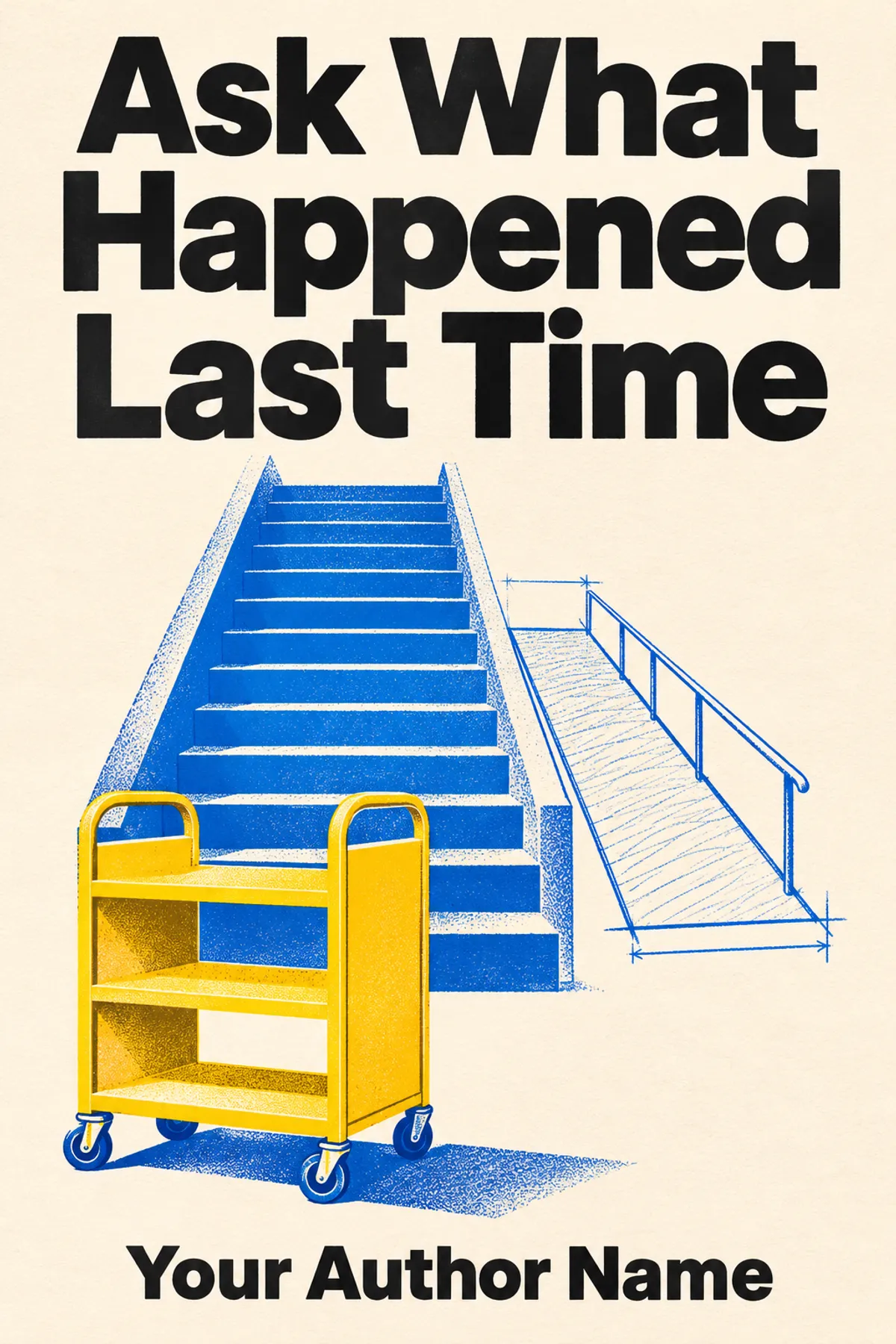
Ask What Happened Last Time
Ask about one recent experience and use the answer to make a better small decision.
ImagineYourBook writes a fresh draft from this idea.
Introduction
Everyone said they would use the trolley. The only person who had carried the boxes asked about a ramp.
Amir had described a small cart for moving donated books from the entrance to the basement. People liked the idea. It had wheels and a low shelf and would make the boxes easier to move. They could picture it immediately. So could Jess, who had carried three boxes on the previous Thursday. She could picture it at the top of the stairs.
"What happened last time?" Amir asked.
Jess described a delivery that arrived early. She had moved the boxes into the hall, found someone with a key and carried them down one at a time. The hardest part was leaving the first two boxes where people could still get past. Nobody had thought about the hallway in the discussion about the trolley.
Ask someone about a recent event before asking what they would do in a future one. Choose a moment they can remember. Invite them to tell it in order. Where did they start? What did they do next? What took longer than expected? Listen for the decisions they made because the arrangement around them did not quite work.
Separate the observation from your idea about it. "Jess left the boxes by the door until she got a key" is something she said. "People need a better place to wait for access" is a possibility you can test. One interview helps you find a question. It can take more examples to learn how often the same thing happens or whom it affects.
Amir talked with two more willing volunteers. One knew a different entrance they could use with permission. Another only sorted books and had never been to the basement. The group made a temporary place for deliveries by the approved entrance and tried it for two weeks.
They still considered a trolley. By then they knew which trip it would have to make.
Chapter plan
Develop this idea
Show an actual question and answer and explain which details matter. A practical guide should distinguish a promising anecdote from a representative result. Include permission, note handling and ways to avoid putting participants on the spot. End with a small change the team can try and one question it still cannot answer. Use examples that preserve dignity and do not manufacture evidence.
- Open with enthusiastic guesses and one useful recent example.
- Name the decision your interview should inform.
- Recruit willing people with different experiences.
- Ask about a recent situation in ordinary words.
- Follow the sequence and notice workarounds.
- Separate what someone said from what you inferred.
- Protect private notes and get appropriate consent.
- Look for contradictory examples.
- Make one small decision and identify a test.
- Tell participants how their input was used when appropriate.
Series possibilities
- A follow-up about testing small changes with willing participants.