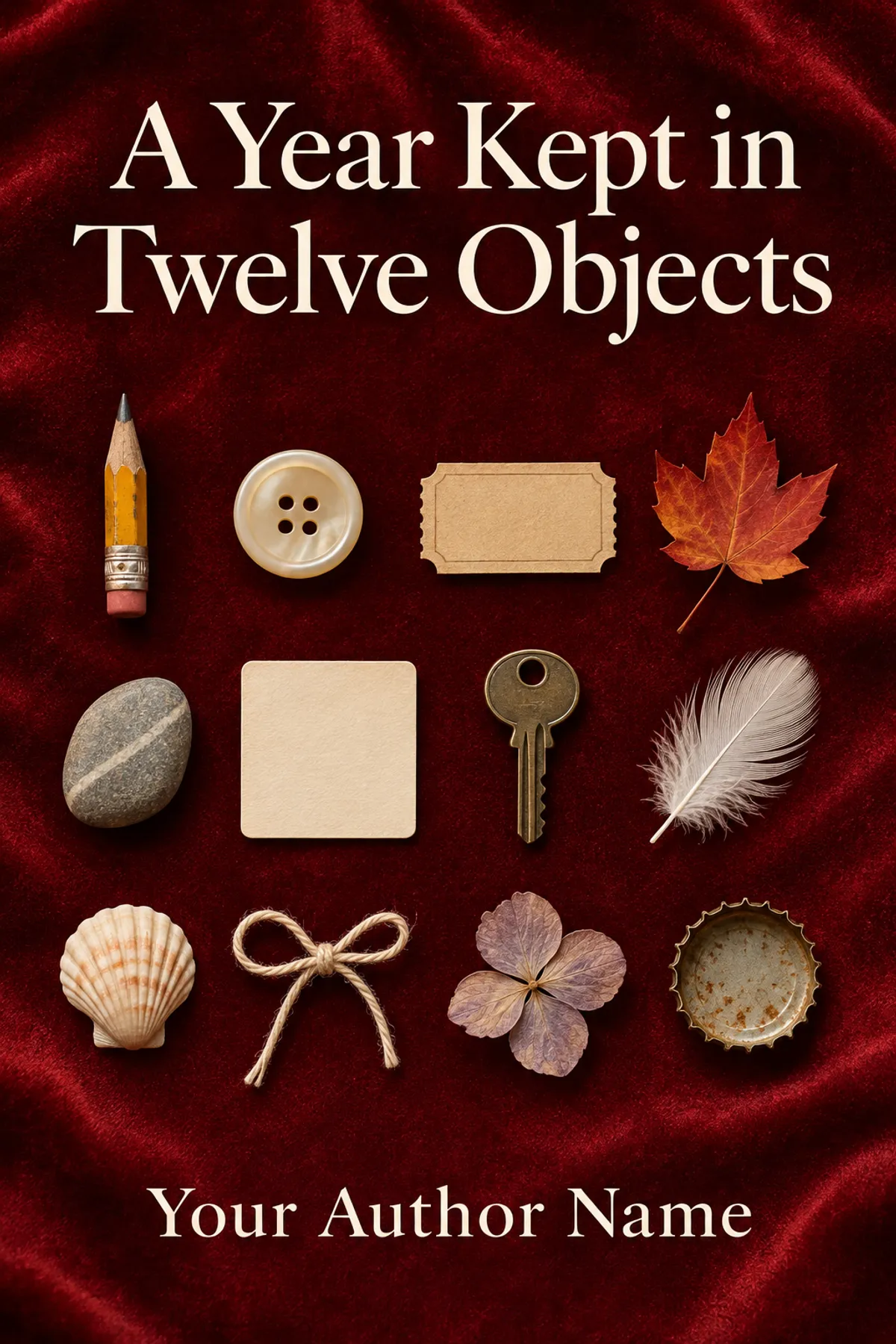
A Year Kept in Twelve Objects
Choose one object a month and keep the story that makes it worth remembering.
ImagineYourBook writes a fresh draft from this idea.
Introduction
The year looked empty until Mae took a library card out of her coat pocket.
She had been trying to write down what happened in April. She could remember a dentist appointment and the day the washing machine started making a sound like a drawer full of screws. She had gone to work, come home and done much of the same thing the next day. It was hard to know what an ordinary month wanted from a journal.
The card had a crease where she had kept it in the coat. In April she used it to visit the library on a Wednesday when it rained. She sat near the window and read half an essay while her laundry ran. By May she had found a place to go on Wednesdays. The card had been there before she knew she was starting a habit.
Choose an object that opens a real moment. It does not have to look important. Write what it is, where it came from and one thing you want to remember about the day around it. A line about the weather can be useful if it tells you why you went inside. A line about the washing machine can be useful if it tells you how you heard it from the street. Keep details because they give a memory its shape.
Decide what you actually need to save. The object may go back into use. A picture can stand in for it. A few words can be enough, especially when keeping or sharing the object would expose somebody else's details. Put your note somewhere you can find it when another month has gone by.
Mae laid out three things from the coat. There was a key, a library card and a stone her friend Danny had given her because it looked like a tiny loaf. She put the key on its hook, the card in her wallet and the stone back in the pocket.
The April entry was three lines long. It gave Wednesday a place in the year.
Chapter plan
Develop this idea
Use objects because they lead to particular details rather than because they look special. Model three lines of context that will make sense a year later. Let readers use a photograph, a note or no physical object. Show how to protect other people's privacy when an object points to a shared moment. Give the book an easy monthly rhythm and permission to leave gaps.
- Open on an ordinary object that recovers a month.
- Choose one item that can cue a specific memory.
- Describe what happened around the item in three short lines.
- Decide whether the object, a picture or just the note needs keeping.
- Record enough context for another person to understand it.
- Set boundaries for what remains private.
- Make an easy version for a month with no obvious object.
- Compare two entries and notice what you want to remember.
- Build a compact collection that has a reliable home.
- Review the year without asking it to tell one tidy story.
Series possibilities
- A companion guide to writing a small annual letter from ordinary memories.