
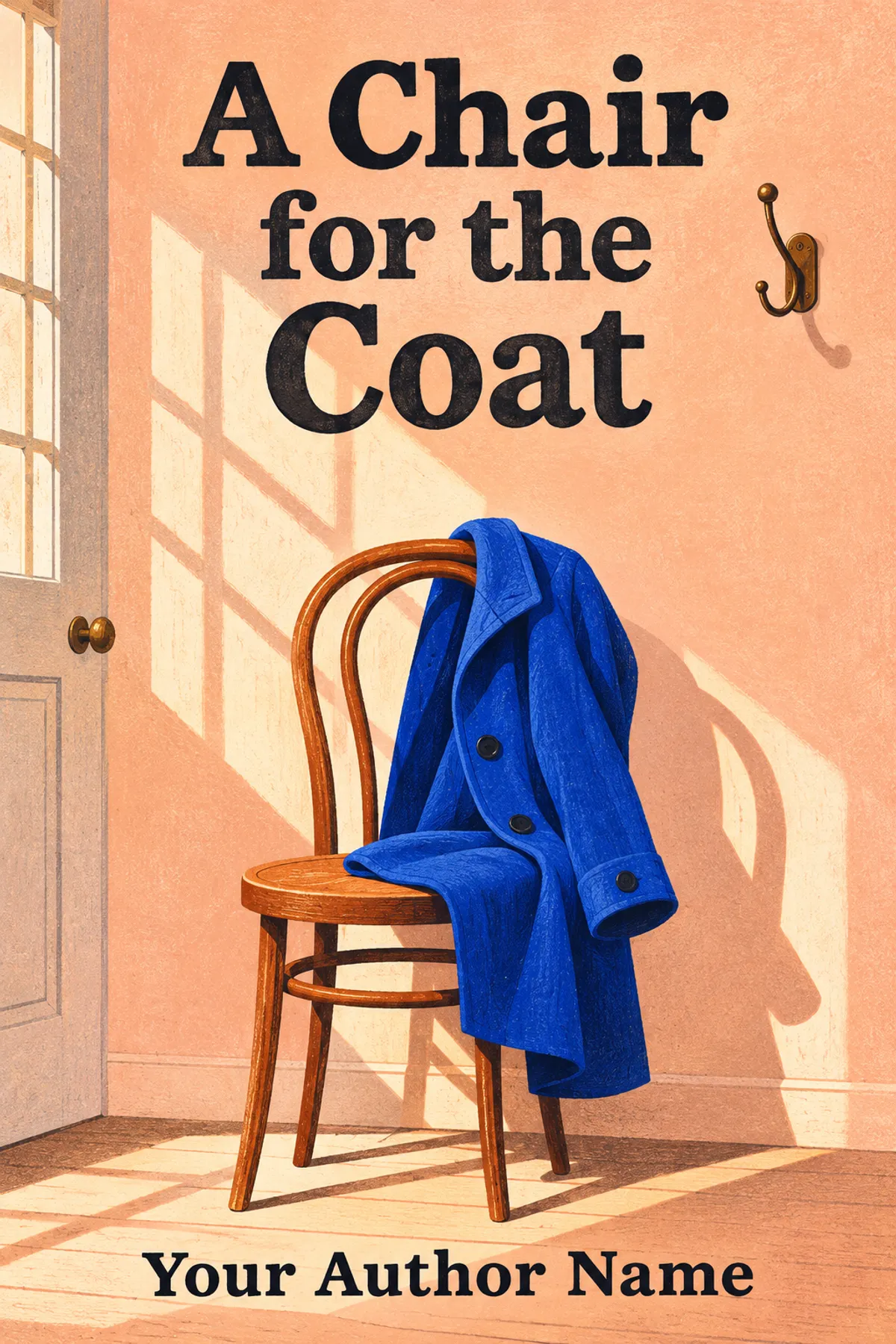
A Chair for the Coat
Redesign one awkward room by tracking where a repeated action naturally lands.
ImagineYourBook writes a fresh draft from this idea.
Introduction
The room had a coat rack. The coats had chosen the chair.
Adele moved three jackets off the chair so her father could sit down to take off his shoes. Faisal's work bag slid onto the floor. The coat rack was in the corner behind the chair, where it could be reached by moving the chair or walking around it. When they first moved in, the rack had looked like an answer to the question of coats.
Faisal came in carrying groceries and dropped his bag on the seat. He knew where the rack was. To put the bag on it, he had to keep holding the groceries while he stepped over a pair of boots. The chair was the place where his hand became free.
Observe one action before you rearrange a room. Start with a thing that lands in the wrong place repeatedly. Follow the person, item or bag for a minute and see what they have to do first. If the ordinary landing place makes sense, it may be telling you what the room needs. Ask who else uses that spot and what their action requires.
Try a reversible change. Adele moved the chair to the other side of the door, where her father could sit and keep a clear path. Faisal put a low basket beside the entrance for his bag. They hung two everyday jackets on hooks they could reach. The rest of the rack stayed in the corner with the coats nobody needed that week.
A change like this is worth trying on an ordinary day. Look at the room when people arrive with wet shoes, full hands or very little patience. Check that the new arrangement keeps important paths clear. If a thing keeps returning to its old place, learn what the old place was doing for it.
On Friday the chair held a person. The bag was beside the door. Adele took the remaining jacket off the back of the chair and gave it a hook that was closer than the seat.
Chapter plan
Develop this idea
Begin with what people do, including the habits the current layout appears to fight. Keep the first experiment reversible and cheap. Show how reach, mobility, house rules and the actual size of an object change where it can go. Use before-and-after examples with a single tested change, and include a household whose members settle on different landing places. Give the reader a way to tell whether the new landing place works when the hall is crowded.
- Open with coats choosing a chair over a rack.
- Observe who uses the room and when.
- Follow one item from arrival to next use.
- Mark where movement, reach and storage conflict.
- Define what the room needs to do first.
- Test a reversible change without buying furniture.
- Check that important paths remain clear.
- Negotiate a landing place everyone can actually use.
- Watch what happens over an ordinary week.
- Draw a simple room map and keep the useful change.
Series possibilities
- A practical guide to setting up a shared room for two activities.